Elevate Your Space: Infusing Spiritual Serenity with Mandala Designs
In today's fast-paced world, creating a sanctuary within your home has become more important than ever. The spaces we inhabit directly influence our mental well-being, emotional stability, and spiritual growth. One of the most transformative ways to elevate your living environment is through the incorporation of mandala designs. These ancient, sacred geometric patterns have transcended centuries and cultures, offering modern homeowners a powerful tool for creating spaces that radiate peace, harmony, and spiritual serenity. At YaretziBrooks, we understand the profound impact that thoughtfully curated design elements can have on your home and your life. This comprehensive guide explores how you can harness the transformative power of mandala designs to create a space that truly reflects your spiritual journey and aesthetic aspirations.
Understanding the Essence of Mandalas
The Historical and Spiritual Significance
Mandalas have captivated human consciousness for thousands of years, originating primarily in Hindu and Buddhist traditions. The word "mandala" itself comes from Sanskrit, meaning "circle" or "complete whole." These intricate designs represent the universe, wholeness, and the infinite nature of existence. In spiritual practices, mandalas serve as meditation focal points, helping practitioners achieve deeper states of consciousness and connection with the divine.
The creation and contemplation of mandalas have been integral to spiritual traditions across Asia, particularly in Tibet, India, and Southeast Asia. Monks and spiritual practitioners have spent countless hours creating these elaborate designs, understanding that the process itself is a form of meditation and spiritual discipline. Each element within a mandala carries symbolic meaning, from the central point representing the divine center to the concentric circles symbolizing the layers of existence and consciousness.
What makes mandalas particularly powerful is their universal appeal. While rooted in specific spiritual traditions, the geometric harmony and visual balance of mandalas resonate with people from all backgrounds and belief systems. This universal quality makes them perfect for modern homes, where residents may draw inspiration from multiple spiritual traditions or simply appreciate the aesthetic and psychological benefits these designs offer.
The Psychology Behind Mandala Design
Beyond their spiritual significance, mandalas have a profound psychological impact on the human mind. The symmetrical, circular nature of mandala designs naturally draws the eye inward, creating a sense of focus and centeredness. This visual characteristic triggers a calming response in the brain, reducing stress and anxiety while promoting feelings of peace and stability.
Research in environmental psychology has shown that exposure to symmetrical, geometric patterns can lower cortisol levels—the stress hormone—and promote the production of serotonin and dopamine, chemicals associated with happiness and well-being. When you incorporate mandala designs into your living space, you're essentially creating an environment that actively supports your mental and emotional health.
The fractal nature of many mandala designs also appeals to our brain's natural preference for certain types of visual information. Fractals, which are patterns that repeat at different scales, are found throughout nature and have been shown to have a calming effect on human observers. This explains why looking at a mandala design can feel so naturally soothing and meditative, even if you're not consciously engaging in a spiritual practice.
The Transformative Power of Mandala Designs in Home Decor
Creating Sacred Spaces
Your home should be more than just a place to sleep and eat; it should be a sanctuary that nourishes your soul and supports your spiritual growth. Mandala designs are exceptionally effective at transforming ordinary rooms into sacred spaces that feel intentional and spiritually aligned. Whether you're creating a dedicated meditation room, a peaceful bedroom retreat, or a harmonious living area, mandalas can serve as the visual anchor that ties your space together and establishes its spiritual purpose.
When you choose to incorporate mandala designs into your home, you're making a conscious statement about your values and priorities. You're declaring that this space is dedicated to peace, mindfulness, and spiritual connection. This intentionality itself becomes part of the transformative power of the space. Every time you enter a room adorned with mandala designs, you're reminded of your commitment to inner peace and spiritual growth.
The beauty of using mandalas in home decor is their versatility. They can be subtle and understated, serving as a gentle reminder of your spiritual practice, or they can be bold and prominent, making a powerful visual statement. Depending on your personal style and the atmosphere you want to create, you can choose mandala designs that range from minimalist and modern to ornate and traditional.
Establishing Visual Harmony and Balance
One of the most immediate benefits of incorporating mandala designs into your space is the visual harmony they create. The inherent balance and symmetry of mandalas naturally organize visual space, making rooms feel more cohesive and intentional. This is particularly valuable in homes where you might have eclectic furnishings or a mix of decorative styles.
A well-placed mandala can serve as a focal point that anchors a room's design scheme. For instance, a large mandala tapestry on a bedroom wall can draw the eye and create a sense of visual order, making the entire room feel more peaceful and organized. Similarly, mandala-patterned throw pillows, rugs, or wall art can tie together disparate design elements and create a unified aesthetic.
The mathematical precision underlying mandala designs also contributes to their ability to create visual harmony. The proportions and relationships between different elements within a mandala follow specific geometric principles that our brains naturally find pleasing. This isn't accidental; it's the result of centuries of spiritual and artistic refinement, where each element has been carefully considered for its visual and spiritual impact.
Choosing the Right Mandala Designs for Your Space
Assessing Your Spiritual Needs and Aesthetic Preferences
Before selecting mandala designs for your home, take time to reflect on what you hope to achieve with these elements. Are you seeking to deepen your meditation practice? Do you want to create a more peaceful bedroom environment? Are you looking to add visual interest to a living room while maintaining a sense of calm? Your specific goals will help guide your choices.
Additionally, consider your personal aesthetic preferences. Mandala designs come in countless variations, from traditional, intricately detailed patterns to modern, minimalist interpretations. Some feature vibrant colors that energize a space, while others use neutral tones that create a more subtle, sophisticated atmosphere. Your home should reflect your unique style and personality, so choose designs that genuinely resonate with you.
Think about the existing color palette and design scheme of each room. Mandala designs can complement virtually any decorative style, but selecting designs that harmonize with your current furnishings will create a more cohesive and intentional look. If your space features warm, earthy tones, you might choose mandalas in terracotta, gold, and deep reds. For cooler, more minimalist spaces, blues, purples, and silvers might be more appropriate.
Understanding Different Mandala Design Styles
Mandala designs vary significantly in their visual characteristics and spiritual associations. Understanding these differences will help you select designs that align with your intentions and aesthetic preferences.
Traditional mandalas, often featuring intricate geometric patterns and multiple concentric circles, draw directly from Hindu and Buddhist artistic traditions. These designs typically include symbolic elements such as lotus flowers, sacred geometry, and spiritual iconography. They're ideal for creating spaces with a strong spiritual focus and work particularly well in meditation rooms or bedrooms dedicated to spiritual practice.
Modern mandala designs reinterpret traditional patterns through a contemporary lens. These might feature simplified geometric shapes, bold color contrasts, or abstract interpretations of traditional mandala elements. Modern mandalas are excellent for creating spaces that feel both spiritually grounded and visually current, making them perfect for homes with contemporary or eclectic design schemes.
Floral mandalas incorporate botanical elements, often featuring flowers, leaves, and natural motifs arranged in mandala patterns. These designs bring the calming energy of nature into your space while maintaining the spiritual and geometric benefits of traditional mandalas. They're particularly effective in bedrooms, bathrooms, and living spaces where you want to create a connection to the natural world.
Chakra mandalas focus on the seven energy centers of the body according to Hindu and yogic traditions. Each chakra is associated with specific colors, elements, and spiritual qualities. Incorporating chakra mandalas into your space can support your energy work and spiritual development, particularly if you practice yoga or energy healing.
Celestial mandalas feature stars, moons, planets, and cosmic imagery arranged in mandala patterns. These designs evoke a sense of wonder and connection to the universe, making them excellent for creating spaces that inspire contemplation and spiritual expansion. They work particularly well in bedrooms and meditation spaces.
Practical Applications: Mandala Designs Throughout Your Home
The Bedroom: Creating a Sanctuary for Rest and Renewal
Your bedroom is arguably the most important space in your home for spiritual practice and personal renewal. This is where you spend a significant portion of your time, and the energy of this space directly impacts your sleep quality, dreams, and overall well-being. Mandala designs are particularly effective in bedrooms because they naturally promote relaxation and peaceful sleep.
Consider starting with a large mandala tapestry as a focal point above your bed. This creates an immediate visual anchor that draws the eye and establishes the spiritual intention of the space. Choose colors that promote relaxation, such as soft blues, purples, greens, or warm earth tones. The symmetrical nature of the mandala will create a sense of balance and stability that supports restful sleep.
Mandala-patterned bedding is another excellent way to incorporate these designs into your bedroom. Duvet covers, pillowcases, and throw blankets featuring mandala patterns can transform your bed into a sacred space of rest and renewal. The subtle presence of mandala designs in your bedding means you'll be surrounded by these calming patterns as you drift off to sleep and awaken each morning.
Wall art featuring mandala designs can be strategically placed to create visual interest without overwhelming the space. A series of smaller mandala prints arranged in a gallery wall format can add sophistication and spiritual depth to your bedroom while maintaining a sense of calm. Alternatively, a single large mandala artwork can serve as a powerful focal point that anchors the room's design.
Don't overlook the power of mandala-patterned curtains or window treatments. These can add both visual interest and functional benefits, helping to filter light and create a more intimate, womb-like atmosphere that supports deep, restorative sleep. Choose designs and colors that complement your overall bedroom aesthetic while promoting the peaceful energy you're seeking to cultivate.
The Meditation Room: Establishing a Dedicated Spiritual Practice Space
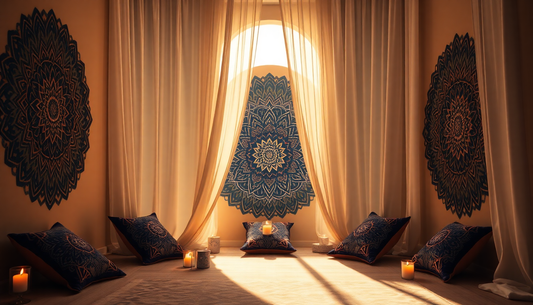
If you have the luxury of a dedicated meditation room, mandala designs become even more powerful. This space is specifically intended for spiritual practice, making it the perfect environment to fully embrace mandala aesthetics and energy.
The walls of a meditation room can be adorned with mandala artwork, tapestries, or even painted mandala designs. Some practitioners choose to create a single, large mandala mural on one wall, creating a powerful focal point for meditation practice. Others prefer multiple mandalas at different scales, creating a visually rich environment that supports deep contemplative states.
A meditation cushion or mat featuring mandala designs can anchor your practice space. Sitting on a mandala-patterned mat creates a direct, physical connection to these sacred designs and can deepen your meditative experience. The visual presence of the mandala beneath you serves as a constant reminder of your spiritual intention and the wholeness you're seeking to cultivate.
Mandala-patterned wall hangings, prayer flags, or fabric panels can be arranged to create a multi-sensory spiritual environment. Some practitioners incorporate mandala designs into their altar spaces, using mandala artwork or objects as focal points for their spiritual practice. The key is to create an environment that feels sacred and intentional, where every element supports your spiritual goals.
Lighting is also important in a meditation room with mandala designs. Consider how light interacts with your chosen mandala artwork. Soft, warm lighting can create an intimate, contemplative atmosphere, while strategic lighting can highlight the intricate details of mandala designs, drawing the eye inward and supporting meditative focus.
The Living Room: Balancing Aesthetics with Spiritual Energy
Your living room is often the heart of your home, a space where family and guests gather. Incorporating mandala designs here requires a balance between creating a spiritually aligned environment and maintaining a welcoming, aesthetically pleasing space that doesn't feel overly themed or spiritual to the point of discomfort for visitors.
A large mandala tapestry or wall hanging can serve as a stunning focal point in a living room, particularly if placed above a sofa or fireplace. Choose designs and colors that complement your existing furnishings while establishing the spiritual tone you want to create. A mandala in warm, earthy tones can create a grounded, welcoming atmosphere, while cooler-toned mandalas can create a more serene, contemplative environment.
Mandala-patterned throw pillows are an excellent way to incorporate these designs subtly throughout your living room. You can scatter several pillows featuring different mandala designs across your sofa and chairs, creating visual interest and spiritual energy without overwhelming the space. This approach allows you to experiment with different colors and styles, creating a layered, sophisticated look.
A mandala-patterned area rug can anchor your living room seating area while adding both visual interest and spiritual energy. The rug grounds the space physically and energetically, creating a defined area that feels intentional and sacred. Choose a design and color palette that complements your overall living room aesthetic while supporting the peaceful, harmonious energy you want to cultivate.
Wall art featuring mandala designs can be incorporated into a gallery wall or displayed as standalone pieces. Consider mixing mandala artwork with other meaningful pieces that reflect your personal style and spiritual journey. This creates a more personalized, eclectic look that feels authentic to your home and values.
The Bathroom: Creating a Spa-Like Sanctuary
Bathrooms are often overlooked in home design, yet they're spaces where we engage in important self-care rituals. Incorporating mandala designs into your bathroom can transform this utilitarian space into a spa-like sanctuary that supports relaxation and self-renewal.
Mandala-patterned shower curtains can set the tone for your entire bathroom aesthetic. Choose designs in calming colors that promote relaxation and create a sense of visual harmony. The shower curtain becomes a focal point every time you enter the bathroom, serving as a visual reminder to slow down and engage in mindful self-care.
Bath mats, towels, and other textiles featuring mandala designs can extend the spiritual energy throughout your bathroom. These practical items become part of your bathroom's aesthetic while supporting the peaceful, intentional atmosphere you're creating. Choose designs that coordinate with your shower curtain and other bathroom elements for a cohesive look.
Wall art or decals featuring mandala designs can be strategically placed in your bathroom to create visual interest and spiritual energy. A mandala design above the sink or on the wall opposite the toilet can serve as a focal point during quiet moments, supporting mindfulness and self-reflection.
Consider incorporating mandala designs into your bathroom storage solutions. Decorative baskets, containers, or shelving units featuring mandala patterns can organize your space while adding visual interest and spiritual energy. This approach makes your bathroom feel more intentional and organized while supporting the peaceful atmosphere you're cultivating.
The Kitchen: Infusing Daily Rituals with Spiritual Intention
The kitchen is often called the heart of the home, a space where nourishment and care are central. Incorporating mandala designs into your kitchen can transform daily cooking and eating rituals into mindful, spiritually aligned practices.
Mandala-patterned kitchen textiles such as dish towels, aprons, and table runners can add visual interest while infusing your cooking space with spiritual energy. These practical items become part of your kitchen's aesthetic, reminding you to approach food preparation with mindfulness and intention.
Wall art or decals featuring mandala designs can be placed in your kitchen to create visual interest and spiritual energy. A mandala design above your stove or on a prominent wall can serve as a focal point that reminds you to cook with love and intention. Some practitioners choose to display mandala artwork that represents abundance, nourishment, or gratitude, aligning their kitchen's energy with their spiritual values.
Mandala-patterned dinnerware, placemats, or table runners can transform your dining experience into a more mindful, spiritually aligned ritual. Eating becomes a sacred act when surrounded by beautiful, intentional design elements. This approach is particularly effective if you practice gratitude before meals or engage in mindful eating practices.
Consider incorporating mandala designs into your kitchen storage solutions. Decorative containers, canisters, or shelving units featuring mandala patterns can organize your space while adding visual interest and spiritual energy. This approach makes your kitchen feel more intentional and organized while supporting the peaceful, nourishing atmosphere you're cultivating.
Selecting and Sourcing Mandala Designs from YaretziBrooks
Understanding Quality and Craftsmanship
When selecting mandala designs for your home, quality and craftsmanship are paramount. At YaretziBrooks, we understand that the items you bring into your home should reflect both aesthetic excellence and spiritual integrity. Whether you're choosing a mandala tapestry, wall art, or decorative textiles, consider the following factors to ensure you're selecting high-quality pieces that will serve you well for years to come.
Material quality is fundamental. Mandala tapestries and textiles should be made from durable, natural fibers that feel good to the touch and age beautifully. Cotton, linen, and silk are excellent choices that offer both durability and aesthetic appeal. The weave or print quality should be consistent, with colors that are vibrant and fade-resistant.
Artistic detail and precision are also important considerations. Whether you're selecting a traditionally detailed mandala or a modern, minimalist design, the execution should be precise and intentional.